
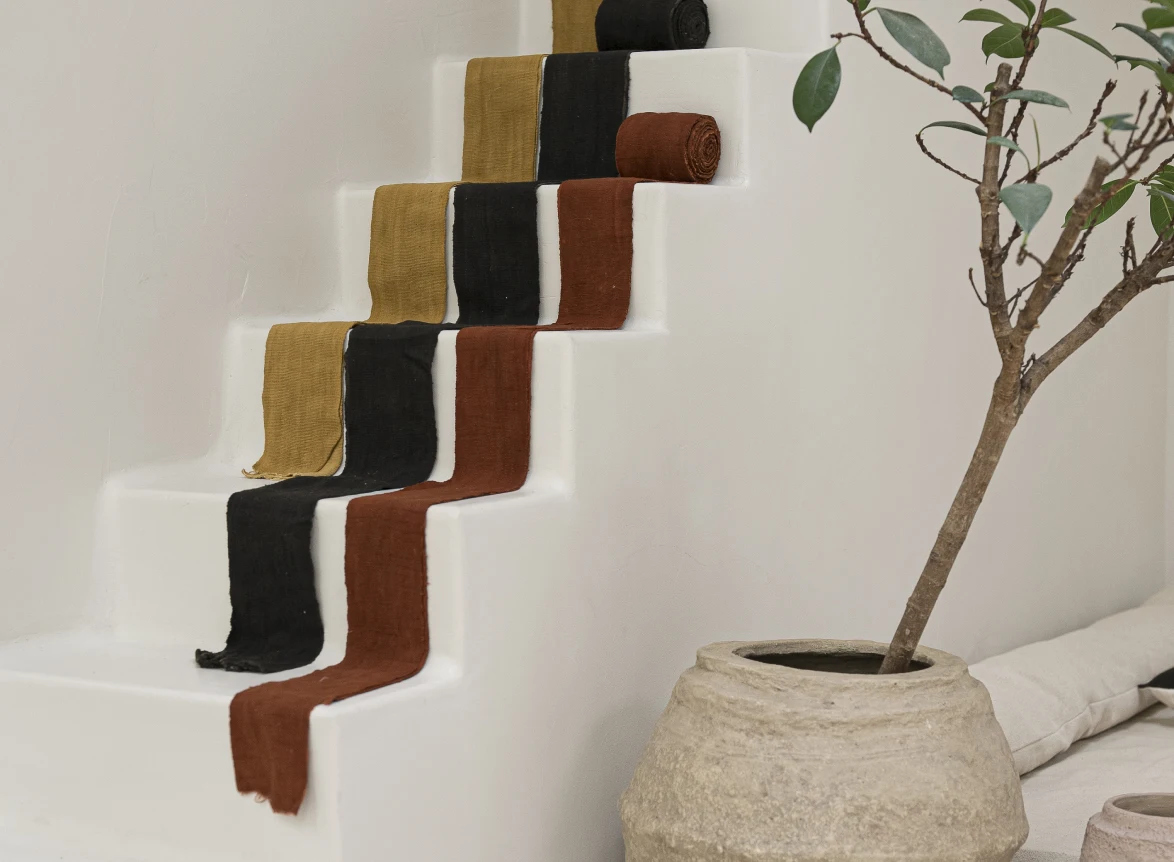
The secrets of making bogolan: an exceptional ancestral fabric
Bogolan, also known as “Mud Cloth” or “Bogolanfini,” is a traditional Malian fabric renowned for its unique patterns and rich cultural symbolism. Used for centuries by the Manding peoples of Mali, Bogolan is valued not only for its aesthetic beauty but also for its historical and spiritual significance. In this article, we reveal the details and steps involved in the making of Bogolan—a remarkable craft that combines traditional expertise and natural materials.
1. Cotton Harvesting and Ginning
The production of Bogolan begins with the hand-harvesting of cotton, carefully selecting the purest and longest fibers. Once harvested, the cotton undergoes ginning to separate the fibers from the seeds—a meticulous process that ensures the quality of the fibers used.
2. Cleaning and Carding the Cotton
After ginning, the cotton is thoroughly cleaned to remove all impurities. It then undergoes carding – a combing process that aligns the fibers in preparation for spinning. This crucial step ensures the production of strong, consistent yarn that will form the backbone of the authentic Bogolan fabric.
3. Spinning and Weaving the Cotton
The cleaned and carded cotton fibers are hand-spun into yarn, a meticulous process that transforms the prepared fibers into workable threads. These yarns are then woven on traditional looms to create narrow fabric strips.
The weaving requires exceptional precision and skill, as the quality of the weave determines the fabric’s durability and how well it will absorb the natural dyes. Depending on its final use, each woven strip is either:
Sewn together to form larger fabric panels, or Left as-is for our Collection 1 pieces, preserving their authentic, artisanal character.
4. Vegetable Dyeing
Le tissu tissé est plongé dans des bains de teinture végétale, utilisant des ingrédients naturels comme le bouleau d’Afrique, des feuilles d’arbres et de l’argile fermentée. Ces teintures offrent des couleurs riches et durables, tout en respectant l’environnement.
5. Applying the Iconic Motifs
The hallmark motifs of Bogolan are meticulously applied by hand using wooden sticks, stencils, or even needle and thread for particularly intricate designs. This stage represents the pinnacle of craftsmanship, demanding remarkable dexterity and artistic vision as each pattern is individually created and imbued with deep cultural meaning. Artisans employ generations of knowledge as they work, with every stroke carrying symbolic significance – whether representing ancestral wisdom, natural elements, or community values. The freehand application ensures each piece remains utterly unique, with slight variations in the mud-resist patterns that testify to their authentic handmade origin. This transformative process elevates the cloth from mere fabric to a storytelling canvas, where traditional symbols converse with contemporary expressions through the universal language of design. The artisan’s skilled hands don’t simply apply patterns, but rather breathe life into the textile, encoding each creation with layers of meaning that connect the wearer to Mali’s rich cultural heritage.
6. Additional Vegetable Dyeing
The fabric undergoes an additional natural dye bath after the motif application to enhance color depth and contrast. This final dyeing stage uses exclusively plant-based pigments, carefully prepared to enrich the existing patterns while preserving their clarity. The process deepens the background tones, creating vibrant contrasts that make the designs stand out. As the cloth absorbs these organic dyes, it develops richer, more complex hues that will maintain their intensity over time. This meticulous step ensures each piece achieves its full visual potential while staying true to Bogolan’s traditional, eco-conscious methods. The result is a striking textile where every shade and symbol emerges with perfect definition, embodying both artistic mastery and respect for natural materials.
7. Washing and Drying
Once the designs are applied and the dyes fully set, the fabric undergoes a gentle washing to remove any residual mud, unveiling the crisp, finished patterns in their full clarity. The cloth is then carefully laid out to dry under the sun’s rays—a vital natural step where sunlight chemically bonds with the organic pigments, permanently setting the colors while simultaneously deepening their vibrancy. This sun-drying phase enhances the Bogolan’s characteristic earthy palette, transforming the iron-rich mud designs into rich black patterns and intensifying the warm terracotta and ochre background tones that distinguish authentic Malian craftsmanship.
The entire process – from washing to solar fixation – ensures each piece achieves both visual brilliance and enduring quality, with colors that grow more luminous over time while maintaining the cultural integrity of this ancestral art form.
8. Finitions and Details
The last stage involves perfecting the fabric with meticulous finishing touches. Master artisans carefully inspect each piece, ensuring flawless pattern execution and textile durability. Where needed, they make delicate adjustments—enhancing colors, reinforcing designs, or refining any details to meet the highest standards of craftsmanship. This painstaking quality control transforms the cloth into a perfected work of art, where every stitch and symbol honors Bogolan’s heritage of excellence.
Conclusion
Bogolan is far more than mere fabric; it is a work of art that tells a story and carries forward a cultural legacy. Every step in its creation—from cotton harvesting to motif application and plant-based dyeing—is executed with remarkable precision and passion by dedicated artisans. At ODEM, we honor and celebrate this ancestral craftsmanship by offering you authentic, one-of-a-kind Bogolan pieces that reflect the richness and diversity of African culture.
By incorporating Bogolan into our designs, we commit to preserving these artisanal traditions while innovating to meet the expectations of our modern, discerning clientele. Explore our collections and let yourself be captivated by the timeless beauty of Bogolan.